
If you've started pricing garage floor coatings in London, you've heard both words: epoxy and polyaspartic. Some companies sell one, some sell the other, and a lot of homeowners assume they're competing products. They're really two different tools, and a well-built floor uses each one where it's strongest.
What epoxy is good at
Epoxy is a two-part resin that has been used on concrete floors for decades. It bonds well to properly prepared concrete, it builds a thick body and it holds decorative flake in place. It also gives the installer time to work, which makes it forgiving to put down.
Its weak spot is sunlight. Standard epoxy can amber, or turn yellow, after long exposure to UV light. In a garage where the door is open on summer afternoons, that shows up as a yellow tint near the door. Used as the top layer, epoxy also tends to scratch and dull faster than a harder topcoat.
What polyaspartic is good at
Polyaspartic is a newer coating from the polyurea family. It's hard, it resists scratches and abrasion, and it's UV stable, so it won't yellow in the sun. That makes it an excellent clear topcoat: the layer your tires, tools and boots actually touch.
It also cures much faster than epoxy. That's great once it's down, but it means there's less working time, so it takes an experienced crew to install it well. It's one reason most DIY kits don't use it.
Quick comparison
- Sunlight: standard epoxy can yellow over time; polyaspartic stays clear.
- Toughness: polyaspartic is the harder, more scratch-resistant surface.
- Cure speed: polyaspartic cures much faster, so it needs a skilled installer.
- Material cost: polyaspartic costs more, which is why the cheapest installs leave it out.
Why our floors use both
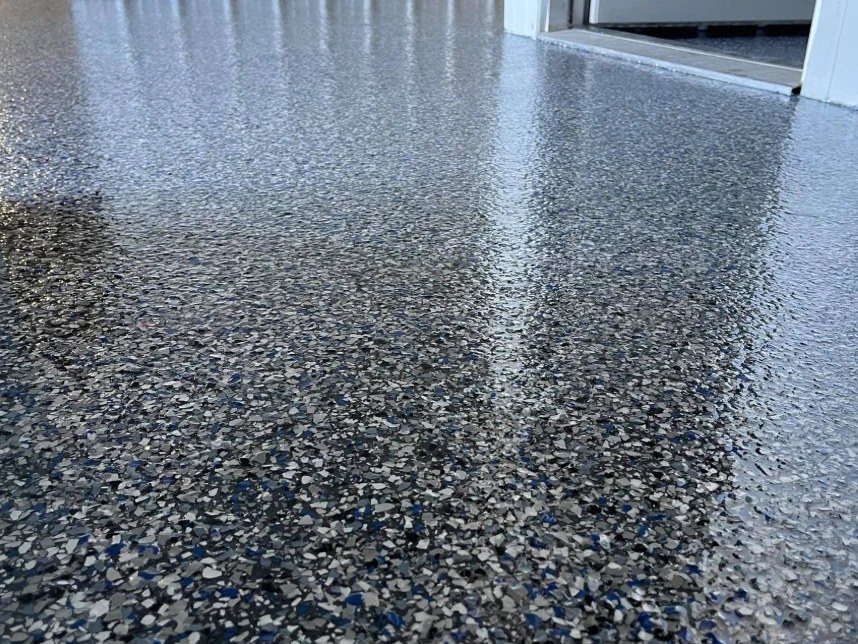
Our garage and basement epoxy floor system is built in layers over three days. Day 1 is diamond grinding, crack repair and a primer and vapour barrier coat. Day 2 is the basecoat with a full flake broadcast. Day 3 is the clear polyaspartic topcoat. The lower layers build the body of the floor and lock in the flake; the polyaspartic on top gives you the tough, easy-to-clean surface that won't yellow.
Does "one-day polyaspartic" mean a better floor?
Because polyaspartic cures quickly, some companies coat a whole garage in a single day. The coating itself isn't the problem. The problem is what gets squeezed to fit the day: less time on prep and no real cure time between layers. That's the most common reason floors peel under hot tires a year or two later. We take three days so each layer cures before the next one goes on, and you can walk on the floor 24 hours after the topcoat and drive on it after 48.
The bottom line
You don't have to choose between epoxy and polyaspartic. Ask any installer what goes into each layer, how they prep the concrete and how long each coat cures. The answers will tell you more than the product name.